
Konark Sun Temple: 10 Fascinating Facts About India’s Architectural Wonder
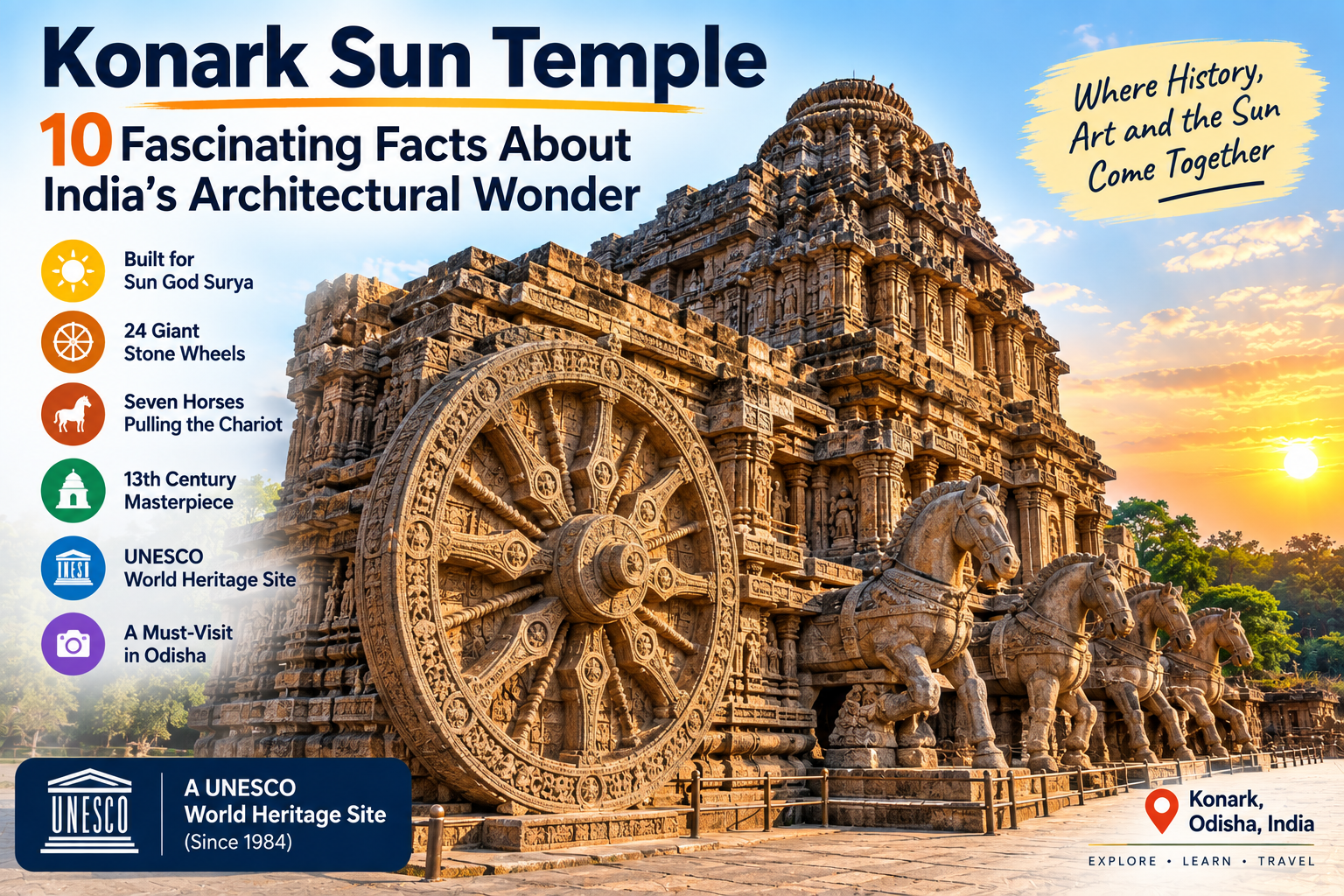
On the eastern coast of India, in Odisha, stands a monument that looks less like a conventional temple and more like a giant stone chariot frozen in time.
This is the Konark Sun Temple.
Built in the 13th century, the temple was designed as a monumental representation of the chariot of Surya, the Sun God. Its enormous carved wheels, horses and detailed sculptures make it one of India’s most remarkable examples of temple architecture. UNESCO describes Konark as an outstanding example of temple architecture and art and inscribed it as a World Heritage Site in 1984.
But there is much more to Konark than its famous stone wheels.
From ancient engineering and astronomical symbolism to its connection with the Ganga dynasty, here are 10 fascinating facts about the Konark Sun Temple.
1. The Entire Temple Was Designed Like the Sun God’s Chariot
The most remarkable feature of Konark is its overall design.
Rather than simply building a temple dedicated to Surya, its creators imagined the monument as a massive celestial chariot carrying the Sun God across the sky.
The temple incorporates the major elements of a chariot, including enormous stone wheels and horses.
UNESCO describes it as a monumental representation of the chariot of Surya, with 12 pairs of wheels and seven horses symbolizing the movement of the Sun across the heavens.
This concept is what makes Konark so different from many other Indian temples.
It is not simply a building dedicated to the Sun.
The entire building becomes a representation of the Sun’s journey across the sky.
2. It Was Built in the 13th Century
The Konark Sun Temple dates back to the 13th century.
It was constructed during the reign of King Narasimha Deva I, who ruled the Eastern Ganga dynasty from approximately 1238 to 1264 CE.
The temple therefore represents an extraordinary achievement from more than 800 years ago.
At that time, builders had to work with massive quantities of stone and create highly detailed sculptures without modern construction equipment.
The scale and precision of the surviving structure provide an extraordinary glimpse into the engineering and artistic abilities of medieval India.
3. The Temple Has 24 Enormous Stone Wheels
The giant stone wheels are probably the most recognizable feature of Konark.
The temple’s chariot design contains 24 carved wheels, arranged as 12 pairs.
UNESCO states that the wheels are about 3 metres in diameter and are decorated with elaborate symbolic designs.
But these wheels aren’t simply giant decorations.
Their spokes, carvings and surrounding details are connected with ideas about time, seasons and the movement of the Sun.
In other words, the architects incorporated astronomical and calendrical symbolism directly into the architecture.
Eiffel Tower: 10 Fascinating Facts About the World’s Most Famous Landmark
4. Some of the Wheels Work Like Giant Sundials
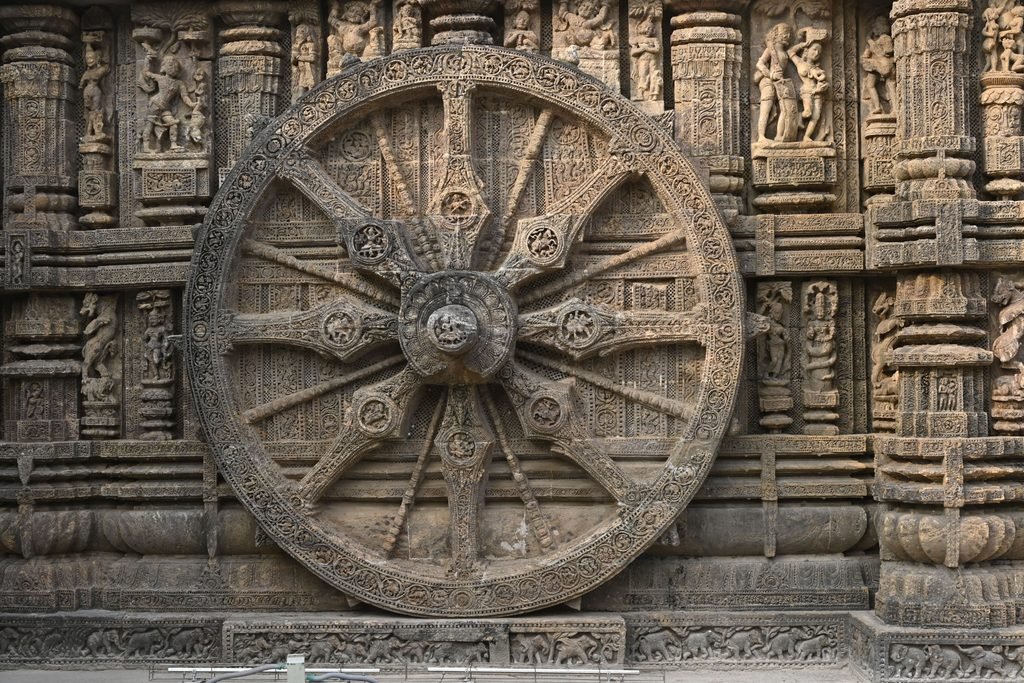
One of the most fascinating features of the Konark wheels is their relationship with the movement of the Sun.
The detailed design of the wheels allows shadows to fall across their spokes and other features.
India’s official tourism website describes the wheels as solar timepieces, explaining that the movement of shadows can be used to determine time.
This makes the wheels particularly fascinating because they combine:
Art + Architecture + Astronomy + Timekeeping
The result is a monument where decoration and scientific observation are closely connected.
5. Seven Horses Symbolize the Sun’s Journey
The chariot is traditionally represented as being pulled by seven horses.
The seven horses are associated with the movement of the Sun across the sky.
UNESCO identifies the temple’s seven horses as part of the symbolic chariot design.
However, what visitors see today is not the complete original arrangement.
UNESCO notes that six of the horses survive in the existing remains.
This is an excellent example of how the present-day ruins can still reveal the original concept even though parts of the monument have been lost.
6. Konark Is a UNESCO World Heritage Site
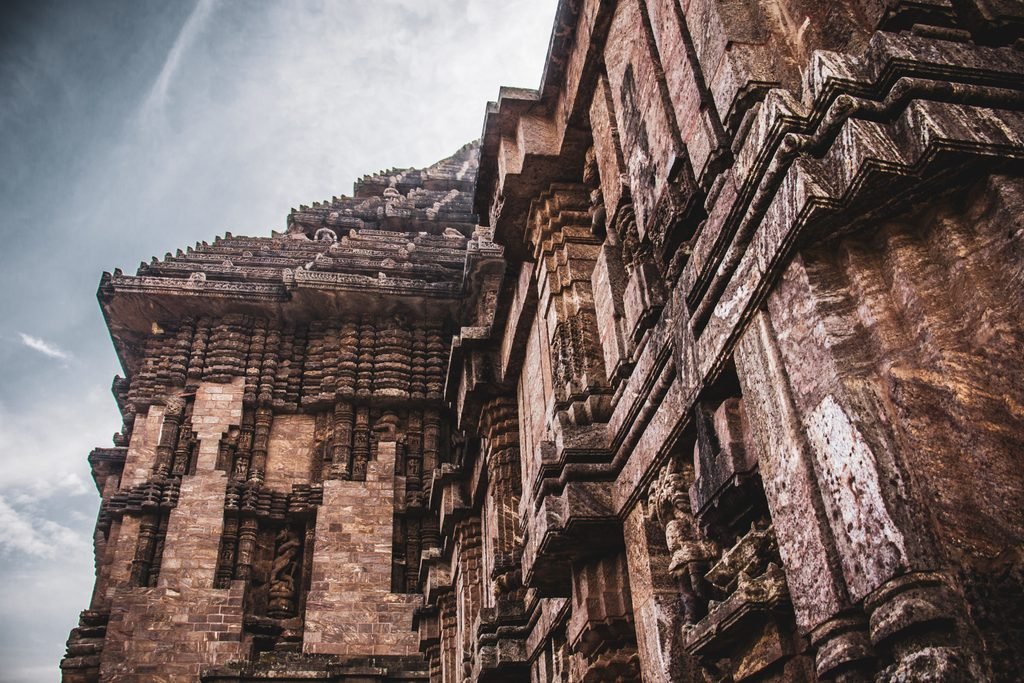
The Konark Sun Temple is not simply a famous tourist attraction.
It has international cultural importance.
UNESCO added the Sun Temple at Konark to the World Heritage List in 1984 under cultural criteria recognizing its artistic achievement, historical significance and connection with the worship of Surya.
UNESCO describes it as:
- An outstanding example of temple architecture
- A masterpiece of creative genius
- An important testimony to the 13th-century kingdom of Orissa
- An important monument in the history of the Surya cult
This makes Konark one of India’s internationally recognized heritage landmarks.
Golden Temple: 10 Fascinating Facts About India’s Holiest Sikh Shrine
7. The Temple Was Once Much Taller Than What We See Today
The Konark Temple that visitors see today is only part of the enormous structure that once stood here.
India’s official tourism website estimates that the original temple reached approximately 227 feet in height during its heyday. The main sanctuary’s towering spire no longer survives, while the Jagamohana and other surviving structures remain prominent parts of the complex.
UNESCO similarly records that the original principal sanctuary once had a high tower, but that the shikhara was destroyed in the 19th century.
So today’s Konark is actually the surviving portion of something considerably larger.
8. The Temple Is Covered With Remarkable Sculptures
Look closely at Konark and you’ll discover that almost every part of the surviving structure contains intricate artistic details.
The carvings include:
- Musicians
- Dancers
- Animals
- Mythological figures
- Everyday activities
- Decorative patterns
- Symbolic representations
- Human figures
UNESCO notes that the temple contains sophisticated depictions of contemporary life and activities, along with lions, musicians, dancers and other sculptural groups.
This means Konark isn’t only a religious monument.
It also provides a visual record of aspects of life and culture during the period in which it was built.
Taj Mahal: 10 Fascinating Facts About India’s Most Famous Monument
9. Konark Combines Art With Ancient Engineering
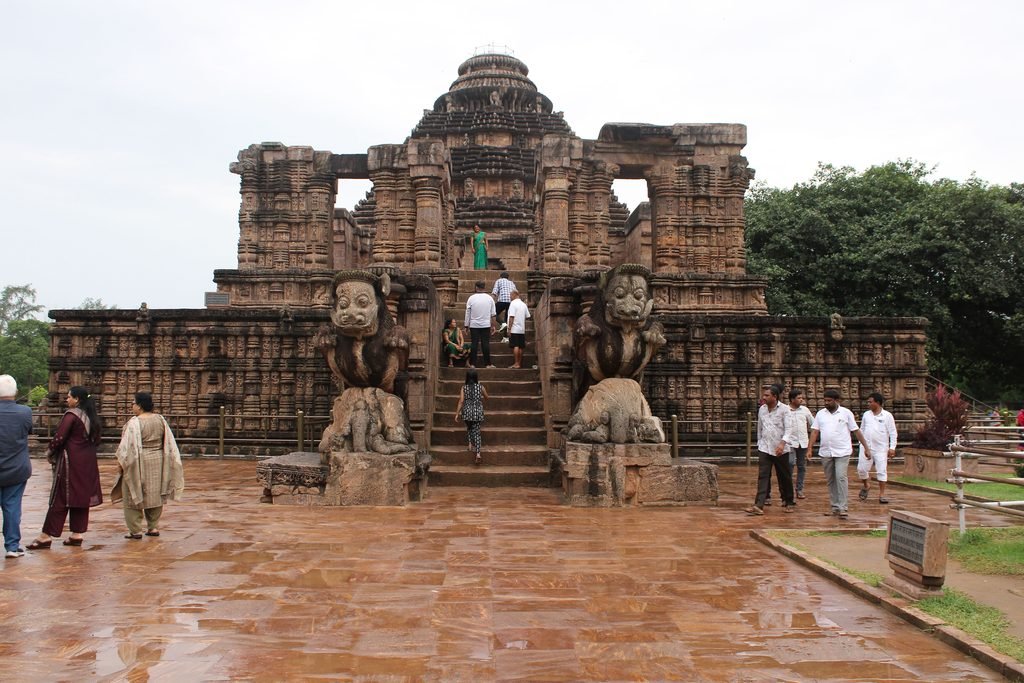
The temple’s beauty is obvious, but its engineering is just as impressive.
The builders worked with different types of stone, including laterite, khondalite and chlorite, each used for particular purposes within the structure. India’s official tourism website also notes the presence of iron elements associated with the construction.
The result is an enormous structure in which:
Stone engineering + sculpture + astronomy + religious symbolism
all come together.
That combination is one reason Konark continues to attract historians, architects, travellers and photographers.
10. Konark Is Still a Living Cultural Landmark
Konark is not simply a monument from the past.
It continues to play an important role in India’s cultural and tourism landscape.
The Konark Festival brings classical Indian dance and music to the area, with performances including Odissi, Bharatanatyam, Manipuri, Kathak, Kuchipudi, Mohiniattam and Chhau.
The temple also sits close to other important attractions in Odisha, including Chandrabhaga Beach and Puri, making it an important part of an Odisha travel itinerary. India’s tourism portal places the temple around 35 km northeast of Puri.
So the monument continues to connect India’s ancient heritage with its living cultural traditions.
Why Is the Konark Sun Temple So Special?
Many ancient monuments are famous because of their age.
Others are famous because of their size.
Konark is special because it brings together both engineering and symbolism on an enormous scale.
Imagine designing a temple as a giant chariot.
Then imagine carving 24 enormous wheels into its base.
Then decorating those wheels and the surrounding structure with thousands of intricate details.
And finally, connecting the entire concept with the movement of the Sun, seasons and time.
That is what makes Konark extraordinary.
What Happened to the Original Temple?
The original temple did not survive completely intact.
Over the centuries, parts of the structure were damaged and lost. The principal sanctuary’s towering shikhara no longer exists, while the surviving structures still demonstrate the original architectural concept.
Natural forces also created challenges.
UNESCO notes that the coastal environment and salt air have contributed to deterioration, including corrosion of metal elements supporting the structure.
Even in its ruined state, however, Konark remains one of India’s most impressive architectural monuments.
When Is the Best Time to Visit Konark?
For travellers, the cooler months between October and March are generally more comfortable for exploring the temple complex.
India’s official tourism portal specifically recommends this period for a more comfortable visit.
The surrounding region also offers additional experiences, including Puri and Chandrabhaga Beach.
For travellers interested in Indian architecture, history and culture, Konark can easily become one of the highlights of an Odisha trip.
Frequently Asked Questions
Where is the Konark Sun Temple?
The Konark Sun Temple is located in Odisha, on India’s eastern coast, around 35 kilometres northeast of Puri.
Who built the Konark Sun Temple?
The temple was built during the reign of King Narasimha Deva I of the Eastern Ganga dynasty in the 13th century.
Why does the Konark Temple look like a chariot?
The entire temple was conceived as a monumental chariot of Surya, the Sun God, representing his movement across the heavens.
How many wheels does the Konark Sun Temple have?
The temple’s chariot design contains 24 carved stone wheels, arranged as 12 pairs.
How many horses are associated with the Konark Temple?
The symbolic design features seven horses pulling the chariot. UNESCO notes that six survive in the existing remains.
Is Konark Sun Temple a UNESCO World Heritage Site?
Yes. The Sun Temple at Konark was inscribed on the UNESCO World Heritage List in 1984.
Can the Konark wheels tell time?
The wheels are designed with features that interact with sunlight and shadows, and India’s official tourism portal describes them as solar timepieces.
What is the Konark Temple famous for?
It is particularly famous for its chariot-shaped architecture, 24 carved wheels, seven-horse symbolism, intricate sculptures and connection with the Sun God Surya.
Conclusion
The Konark Sun Temple is much more than an ancient temple in Odisha.
It is a giant representation of the Sun God’s chariot, a remarkable example of medieval Indian architecture, a UNESCO World Heritage Site and a fascinating combination of art, astronomy and engineering.
Its 24 wheels, seven-horse symbolism and extraordinary stone carvings show how architecture can communicate much more than religious ideas.
Even after centuries of damage and loss, Konark continues to tell its story through stone.
It is one of those Indian landmarks that becomes even more fascinating the closer you look.