
Golden Temple: 10 Fascinating Facts About India’s Holiest Sikh Shrine
The Golden Temple, officially known as Sri Harmandir Sahib, stands as one of the most breathtaking and spiritually significant landmarks in India. Located in Amritsar, Punjab, this shimmering shrine draws millions of visitors every year — not just Sikh pilgrims, but travelers of every faith who come to witness its beauty and experience its atmosphere of peace.
Few religious structures in the world combine architectural splendor with such deep spiritual meaning. The Golden Temple is not only a place of worship but also a symbol of equality, service, and community that has shaped Sikh identity for centuries.
Here are 10 fascinating facts that reveal why the Golden Temple remains one of India’s most remarkable places to visit.
Table of Contents
- The Temple Was Founded by the Fourth Sikh Guru
- It Sits in the Middle of a Sacred Pool
- The Gold Plating Covers Real Silver and Copper
- The Temple Has Four Doors Representing Openness to All
- It Runs the World’s Largest Free Community Kitchen
- The Akal Takht Stands Beside the Temple
- Sikh History and Sacrifice Surround the Shrine
- The Adi Granth Is Recited Continuously
- Millions of Visitors Arrive Each Year
- The Golden Temple Complex Reflects Sikh Values
1. The Golden Temple Was Founded by the Fourth Sikh Guru
The foundation of the Golden Temple traces back to Guru Ram Das, the fourth Sikh Guru, who excavated the sacred pool around which the temple now stands in the late 16th century. His successor, Guru Arjan Dev, later completed the construction of the temple itself and installed the Adi Granth, the central religious scripture of Sikhism, inside it.
This layered history means the Golden Temple was not built by a single ruler or architect, but shaped gradually by successive Sikh Gurus who each added spiritual and structural significance to the site. The Shiromani Gurdwara Parbandhak Committee (SGPC), the body that manages the Golden Temple today, maintains detailed records of this history.
2. It Sits in the Middle of a Sacred Pool
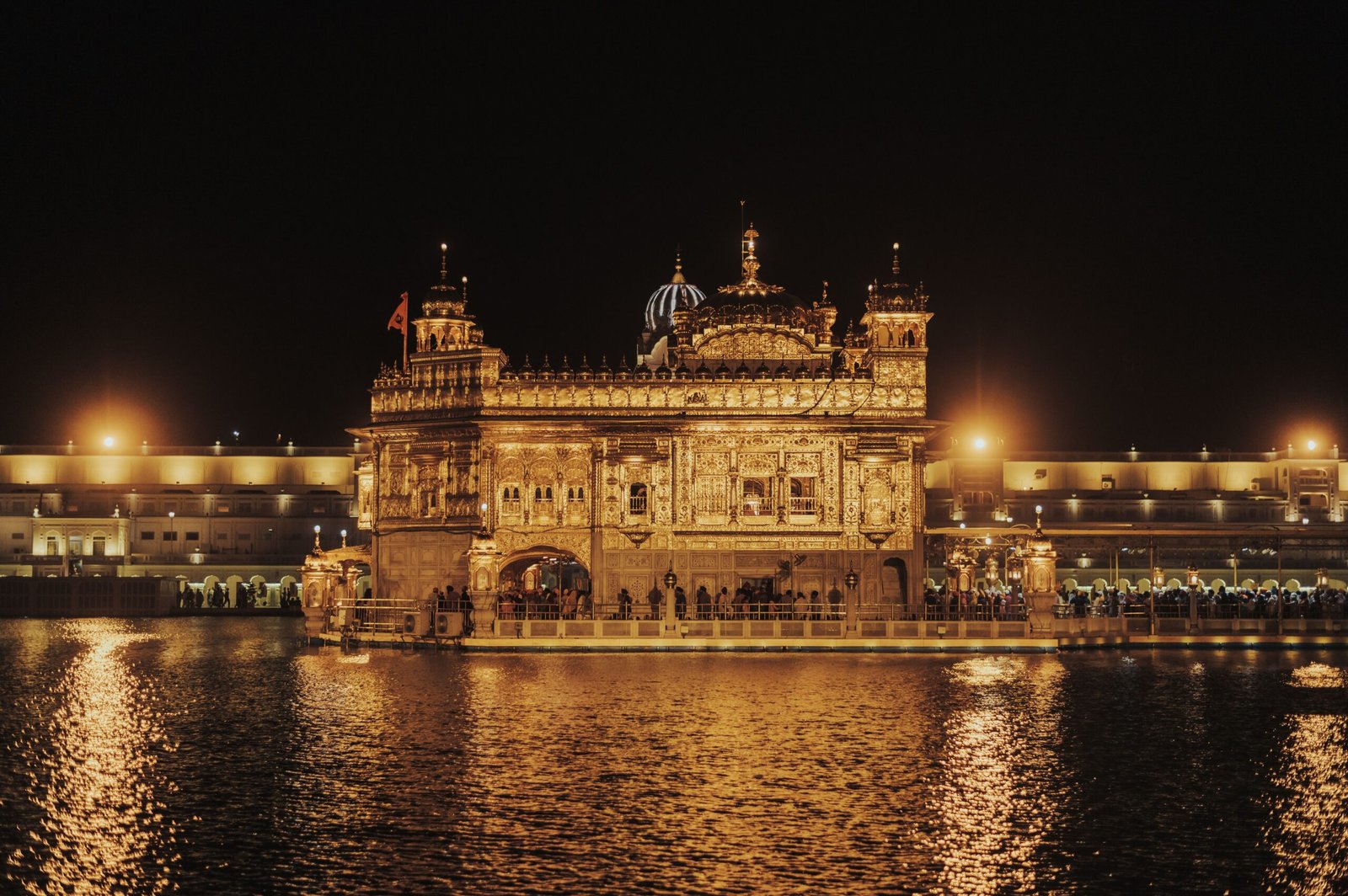
One of the most striking features of the Golden Temple is its location — right in the center of a large pool known as the Amrit Sarovar, or “Pool of Nectar.” The city of Amritsar itself takes its name from this sacred water body.
Pilgrims often bathe in the pool as an act of purification before entering the temple. The reflection of the golden structure on the still water creates one of the most photographed and recognizable images associated with Sikh architecture.
3. The Gold Plating Covers Real Silver and Copper
Many visitors assume the temple’s shimmering exterior is solid gold, but the structure is actually built from marble and copper, with gold plating applied to the upper floors and dome. This gold-leaf covering was added in the early 19th century under the patronage of Maharaja Ranjit Singh, the founder of the Sikh Empire.
The gilding was both an artistic and devotional gesture, transforming the temple into the glowing landmark recognized around the world today. Encyclopaedia Britannica notes that the temple blends Mughal and Rajput architectural styles, reflecting its rich and layered history.
4. The Temple Has Four Doors Representing Openness to All
Unlike many traditional religious structures with a single entrance, the Golden Temple has four doors, one on each side. This design carries deep symbolic meaning: it represents the idea that people from all four directions, all religions, and all walks of life are welcome inside.
This architectural choice reflects one of Sikhism’s core values — equality and openness — making the temple a place where visitors of any background can enter and pay their respects.
5. It Runs the World’s Largest Free Community Kitchen
Perhaps one of the most remarkable aspects of the Golden Temple is its langar, a free community kitchen that serves meals to everyone who visits, regardless of religion, caste, or social status. The langar at the Golden Temple is considered the largest of its kind in the world, feeding tens of thousands of people daily, entirely through volunteer effort and donations.
This tradition of selfless service, known as seva, is central to Sikh philosophy and remains one of the most powerful demonstrations of equality practiced anywhere in the world.
6. The Akal Takht Stands Beside the Temple
Directly facing the Golden Temple is the Akal Takht, one of the five takhts (seats of temporal authority) in Sikhism. While the Golden Temple represents spiritual authority, the Akal Takht represents the temporal and political voice of the Sikh community.
Together, these two structures illustrate the Sikh principle of balancing spiritual devotion with worldly responsibility — a concept unique among major world religions.
7. Sikh History and Sacrifice Surround the Shrine
The Golden Temple has witnessed significant moments in Sikh history, including periods of conflict and rebuilding. Its walls and surrounding structures carry stories of resilience, as the temple has been damaged and restored multiple times across history.
This history adds a layer of emotional depth for visitors, many of whom come not only to admire the architecture but to connect with centuries of Sikh struggle, faith, and endurance.
8. The Adi Granth Is Recited Continuously
Inside the temple, the Adi Granth (Guru Granth Sahib), the holy scripture of Sikhism, is ceremonially placed each morning and read continuously throughout the day by rotating reciters. This uninterrupted recitation creates a constant atmosphere of devotion inside the shrine.
The scripture is treated with the same reverence as a living Guru, and its presence forms the spiritual core of the entire temple complex.
9. Millions of Visitors Arrive Each Year
The Golden Temple attracts an extraordinary number of visitors annually, often cited as more than many of India’s most famous tourist attractions, including the Taj Mahal. Unlike ticketed monuments, entry to the Golden Temple is completely free, and visitors of all faiths are welcomed with the same hospitality shown to Sikh pilgrims.
This accessibility, combined with the temple’s spiritual reputation, has made it a must-visit destination for travelers exploring northern India.
10. The Golden Temple Complex Reflects Sikh Values
Beyond its stunning appearance, the Golden Temple complex — including the sarovar, the langar, the Akal Takht, and the surrounding walkways — functions as a living expression of Sikh values: equality, service, humility, and devotion.
Every element of the temple, from its four open doors to its free kitchen, reinforces a message that has remained consistent since its founding: everyone is welcome, and everyone is equal.
Golden Temple at a Glance
| Topic | Key Fact |
|---|---|
| Location | Amritsar, Punjab, India |
| Also known as | Sri Harmandir Sahib |
| Founded by | Guru Ram Das (pool), completed by Guru Arjan Dev |
| Sacred pool | Amrit Sarovar |
| Material | Marble and copper with gold plating |
| Gold plating added | Early 19th century, under Maharaja Ranjit Singh |
| Number of entrances | Four, one on each side |
| Community kitchen | Langar — world’s largest free kitchen |
| Nearby structure | Akal Takht |
| Entry fee | Free for all visitors |
Frequently Asked Questions
What is the Golden Temple famous for? The Golden Temple is famous for its gold-plated architecture, its sacred pool, its free community kitchen (langar), and its significance as the holiest shrine in Sikhism.
Is the Golden Temple made of real gold? The temple’s upper floors and dome are covered in gold plating over a base of marble and copper — it is not solid gold.
Who built the Golden Temple? Guru Ram Das, the fourth Sikh Guru, established the sacred pool, and Guru Arjan Dev, the fifth Guru, completed the temple and installed the Adi Granth.
Is the Golden Temple free to visit? Yes, entry to the Golden Temple is completely free for all visitors, regardless of religion or nationality.
What is langar at the Golden Temple? Langar is a free community meal served to all visitors at the Golden Temple, considered the largest free kitchen of its kind in the world.
Conclusion
The Golden Temple is far more than a beautiful landmark — it is a living symbol of equality, service, and devotion that continues to inspire visitors from around the world. From its shimmering reflection on the Amrit Sarovar to its free kitchen feeding thousands daily, every part of the temple tells a story of faith and community.
For anyone traveling through northern India, a visit to the Golden Temple offers not just a memorable sight, but a rare glimpse into a tradition of openness and hospitality that has endured for centuries.
(Related reading: Taj Mahal: 10 Fascinating Facts About India’s Most Famous Monument)