
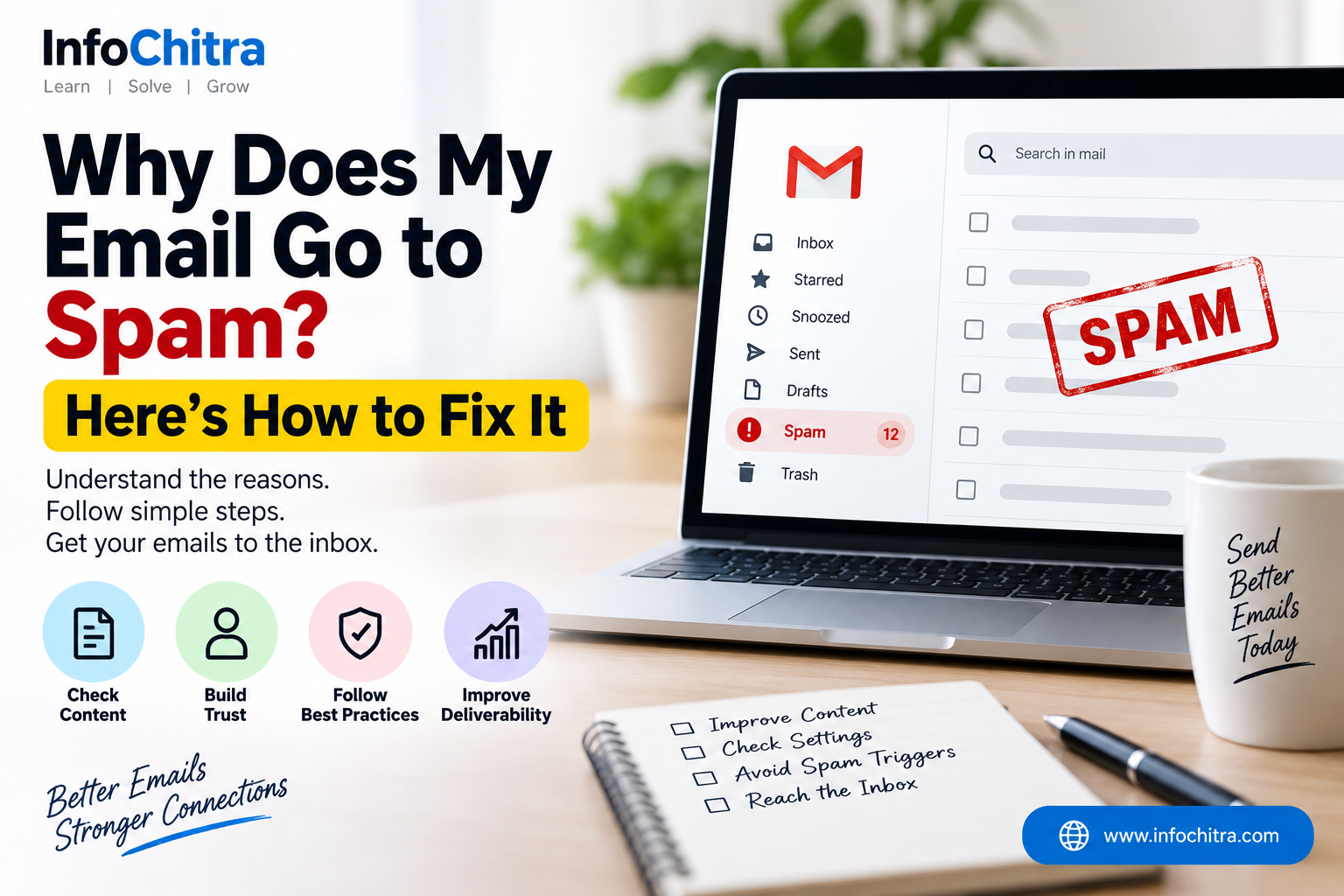
Why Does My Email Go to Spam? Here’s How to Fix It
You write a perfectly normal email, hit send, and later find out it landed straight in the recipient’s spam folder — never even seen. Whether you’re sending a job application, a business proposal, or a simple newsletter, having your emails disappear into spam is frustrating precisely because there’s rarely an obvious reason why.
The good news is that email spam filters aren’t random. They follow identifiable patterns, and once you understand what triggers them, you can fix most issues yourself. Here’s a clear breakdown of why your email goes to spam and what to do about it.
Table of Contents
- Why Does My Email Go to Spam in the First Place?
- Your Email Authentication Might Be Missing (SPF, DKIM, DMARC)
- Why Your Sender Reputation Matters More Than You Think
- Certain Words and Phrases Can Trigger Spam Filters
- Why Too Many Links or Images Can Be a Problem
- Sending From a Free Email Address Can Hurt Deliverability
- Why Low Engagement Makes Things Worse Over Time
- What to Do If a Specific Recipient Keeps Marking You as Spam
- How to Test Whether Your Email Will Land in Spam
- A Simple Checklist Before You Hit Send
1. Why Does My Email Go to Spam in the First Place?
Email providers like Gmail, Outlook, and Yahoo use automated spam filters that scan every incoming email against dozens of signals before deciding where it belongs — inbox, spam, or somewhere in between. These filters look at technical authentication records, the sender’s past reputation, the actual content and formatting of the email, and how previous recipients have interacted with similar messages.
No single factor usually causes an email to be marked as spam. Instead, it’s typically a combination of several small red flags that, together, push a message over the threshold into the spam folder. As Wikipedia notes in its overview of email spam, unsolicited bulk email has made up a substantial share of global email traffic for years, which is precisely why mail providers invest so heavily in filtering systems that scan for these combined warning signs.
2. Your Email Authentication Might Be Missing (SPF, DKIM, DMARC)
If you’re sending emails from a custom domain (like yourname@yourbusiness.com) rather than a standard Gmail or Outlook address, missing authentication records are one of the most common technical reasons emails end up in spam.
Three records matter here:
- SPF (Sender Policy Framework) — confirms your email server is authorized to send on behalf of your domain
- DKIM (DomainKeys Identified Mail) — digitally signs your email to prove it wasn’t altered in transit
- DMARC (Domain-based Message Authentication) — tells receiving servers what to do if SPF or DKIM checks fail
What to do: If you manage your own domain, check with your hosting provider or email service (like Google Workspace or Microsoft 365) to confirm these records are correctly set up. According to Wikipedia’s overview of Sender Policy Framework, SPF works by publishing a list of authorized sending servers in your domain’s DNS records, which receiving mail servers check before deciding whether to trust an incoming message. Most email platforms provide simple guides for adding these records through your domain’s DNS settings.
3. Why Your Sender Reputation Matters More Than You Think
Every email address and domain builds up a “reputation” over time, based on how recipients interact with your past emails. If people frequently delete your emails without opening them, mark them as spam, or if your emails frequently bounce back as undeliverable, mail providers start trusting your address less — even if a specific email itself looks completely fine.
This reputation is often invisible to you as the sender, which is what makes spam issues feel so confusing. A perfectly well-written email can still land in spam simply because of accumulated reputation issues from previous sends.
4. Certain Words and Phrases Can Trigger Spam Filters

While modern spam filters are far more sophisticated than simple keyword blocklists, certain words and phrases — especially in combination — can still raise red flags. Common triggers include excessive urgency (“Act now!”, “Limited time only!”), financial promises (“Make money fast”, “100% free”), and overly aggressive sales language, particularly when combined with excessive capitalization or exclamation marks.
What to do: Read your email as if you were the recipient. If it reads like a typical spam or scam message you’d personally delete without a second thought, spam filters are likely to flag it too.
5. Why Too Many Links or Images Can Be a Problem
Emails with a high number of links, especially links to unfamiliar or newly created domains, can appear suspicious to spam filters. Similarly, emails that are almost entirely made up of a single large image (a common mistake with promotional emails) often get flagged, since spam filters can’t easily “read” image content the way they can read text.
What to do: Keep your email’s ratio of text to images and links balanced, and avoid linking to too many different domains within a single email.
6. Sending From a Free Email Address Can Hurt Deliverability
If you’re sending business or professional communication from a free email address (like a Gmail or Yahoo account) but the email content looks like it’s coming from a company — using a business signature, logo, or company name — this mismatch can sometimes appear suspicious to spam filters, since it resembles a common phishing pattern.
What to do: For genuine business communication, using a custom domain email address that matches your actual business name is both more professional and generally more reliable for deliverability.
7. Why Low Engagement Makes Things Worse Over Time
Email providers pay close attention to how recipients engage with your messages over time. If your emails are rarely opened, or are frequently deleted without being read, this signals to spam filters that your content might not be wanted — even if no one has explicitly marked you as spam.
This creates a frustrating cycle: low engagement leads to more emails going to spam, which leads to even lower engagement, since recipients never see the emails in the first place.
What to do: If you’re sending regular emails (like a newsletter), focus on genuinely engaging content that recipients want to open, and consider removing consistently inactive addresses from your list over time.
8. What to Do If a Specific Recipient Keeps Marking You as Spam

Sometimes the issue isn’t about spam filters broadly, but a specific relationship with one recipient’s email provider. If someone repeatedly reports your emails as spam, or if their spam filter has specifically learned to distrust your address, other emails you send them may continue landing in spam even after you fix broader deliverability issues.
What to do: Ask the recipient directly to check their spam folder, mark your specific email as “Not Spam,” and add your address to their contacts or safe sender list. This directly signals to their email provider that your messages are wanted.
9. How to Test Whether Your Email Will Land in Spam
Before sending an important email to a large list or a critical recipient, it’s worth testing how spam filters are likely to treat it. Several free online tools allow you to send a test email and receive a “spam score” report, highlighting specific issues like missing authentication records, risky phrases, or formatting problems.
What to do: Search for a free “email spam checker” tool, send a test version of your email through it, and review the flagged issues before sending your actual email.
10. A Simple Checklist Before You Hit Send
To reduce the chances of your email landing in spam, quickly run through this checklist before sending anything important:
- Confirm SPF, DKIM, and DMARC are set up correctly (if using a custom domain)
- Avoid excessive urgency, all-caps text, or aggressive sales language
- Balance the ratio of text, links, and images in your email
- Use a professional, consistent sender name and address
- Avoid sending to large numbers of unfamiliar addresses at once
- Ask recipients to whitelist your address if spam issues persist
Common Reasons Emails Go to Spam — At a Glance
| Reason | What It Means | Quick Fix |
|---|---|---|
| Missing SPF/DKIM/DMARC | Domain not properly authenticated | Set up records via your email host |
| Poor sender reputation | Past emails ignored or marked as spam | Improve engagement, avoid mass unsolicited sends |
| Spam trigger words | Urgent, sales-heavy language | Rewrite in a natural, conversational tone |
| Too many links/images | Looks suspicious to filters | Balance text-to-link/image ratio |
| Low recipient engagement | Emails rarely opened | Focus on genuinely useful content |
| One recipient keeps flagging you | Learned distrust from one inbox | Ask them to whitelist your address |
Frequently Asked Questions
Why does my email go to spam even though I know the recipient? This can happen if their spam filter has learned to distrust your address due to past low engagement, or if a specific email trips content-based spam triggers, even in a normal conversation.
What are SPF, DKIM, and DMARC? They are technical authentication records that prove your email is genuinely from your domain and hasn’t been altered — missing these is one of the most common technical causes of spam issues for custom domain emails.
Can too many links in an email cause it to go to spam? Yes, especially links to unfamiliar or newly registered domains, which can resemble patterns seen in phishing or spam campaigns.
How can I check if my email will be marked as spam before sending? Free online “email spam checker” tools let you send a test email and receive a report highlighting specific deliverability issues before you send to your actual recipients.
What should I do if someone tells me my email went to spam? Ask them to mark it as “Not Spam” and add your email address to their contacts or safe sender list, which directly improves how their email provider treats your future messages.
Conclusion
Emails don’t land in spam randomly — they’re filtered based on identifiable technical, behavioral, and content-based signals that you can actually address. From setting up proper authentication records to writing in a natural, non-salesy tone, most spam issues are fixable once you understand what’s actually triggering them. A little attention to these details can make the difference between an email that gets read and one that quietly disappears.
(Related reading: I Clicked a Suspicious Link — What Should I Do Now?)