
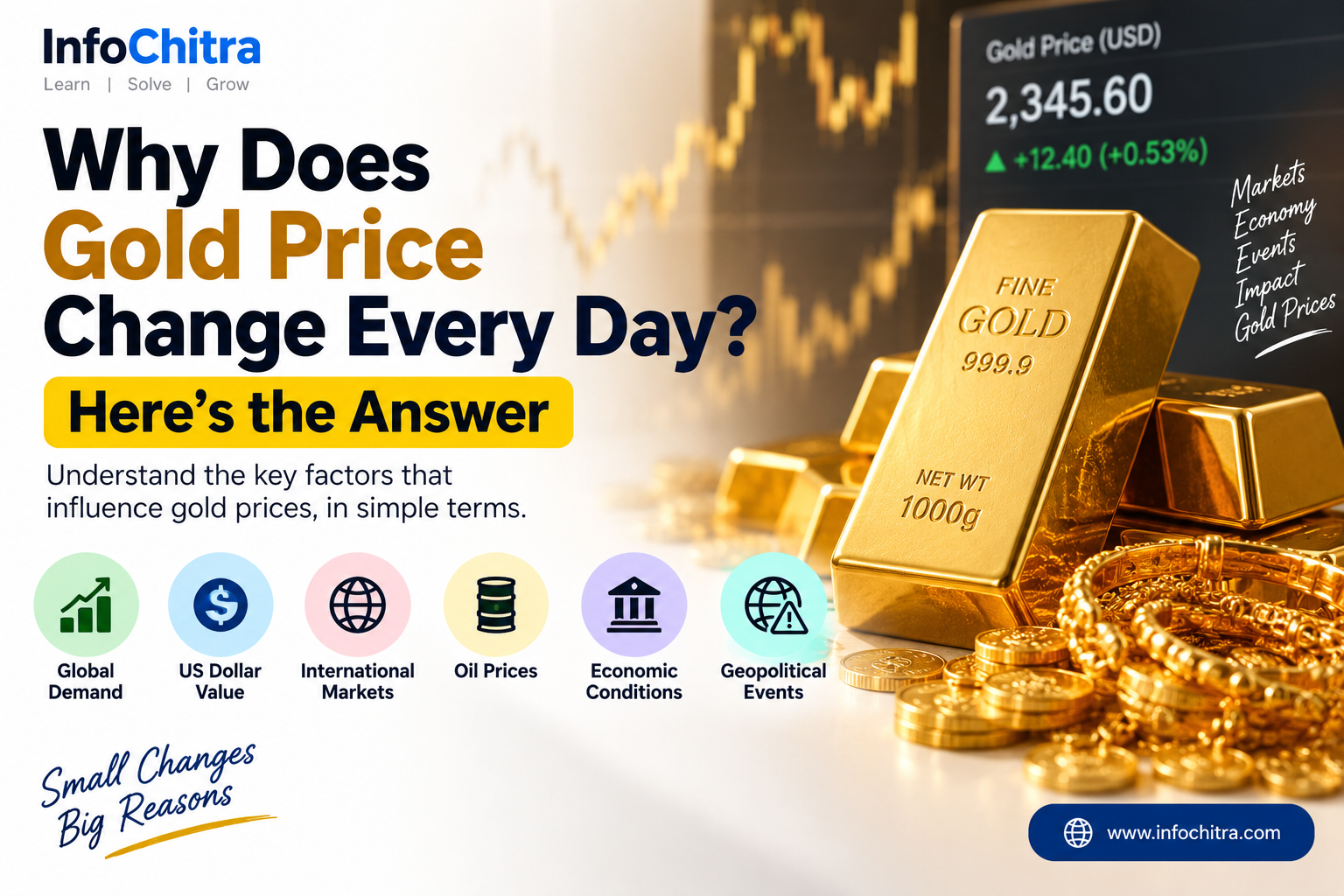
Why Does Gold Price Change Every Day? Here’s What Actually Decides It
You check the gold rate before a wedding shopping trip, then check again a week later — and somehow it’s different, again. For something that feels so solid and permanent, gold’s price seems to move almost as often as you look at it. If you’ve ever wondered why gold price changes every single day, and what’s actually driving those changes, the answer involves a surprisingly interconnected mix of global markets, currency values, and local Indian factors.
This guide breaks down exactly what decides gold’s price in India, one factor at a time, so the next time the rate moves, you’ll understand exactly why.
Table of Contents
- It Starts With the International Gold Price
- The Rupee-Dollar Exchange Rate Matters Just as Much
- Import Duty and GST Add a Fixed Layer on Top
- Why 24K Gold Costs More Than 22K
- Why Jewellery Costs More Than the “Gold Rate” You See Online
- Wedding Season and Festivals Push Demand Up
- Gold Is a “Safe Haven” During Uncertain Times
- Central Bank Decisions Move Gold More Than You’d Expect
- Why MCX Gold Prices Can Look Different From Jeweller Prices
- How to Actually Check an Accurate Gold Rate Today
1. It Starts With the International Gold Price
Gold is a globally traded commodity, and its base price — often referred to by its trading symbol, XAUUSD — is set on international markets, primarily influenced by supply and demand among large institutional investors, central banks, and traders worldwide. This international price, quoted in US dollars per troy ounce, forms the foundation that every other gold price in the world, including in India, is ultimately built on top of.
Because this price is traded continuously across global markets, it can shift multiple times within a single day — which is the very first reason your local gold rate never stays perfectly still. According to Business Standard’s coverage of gold rate factors, international commodity price movements directly influence domestic rates, alongside inflation trends and geopolitical developments that shape global gold demand.
2. The Rupee-Dollar Exchange Rate Matters Just as Much
Since the international gold price is set in US dollars, but Indians buy gold in rupees, the INR-to-USD exchange rate becomes a second major factor affecting the final price. If the rupee weakens against the dollar, it takes more rupees to buy the same amount of gold, pushing the domestic price up — even if the international dollar price of gold hasn’t changed at all.
This is why you’ll sometimes see days when international gold prices are flat, but Indian gold rates still shift, purely because of currency movement.
3. Import Duty and GST Add a Fixed Layer on Top

Since India imports the vast majority of its gold — with domestic mining contributing well under 1% of total demand — government-imposed import duty becomes a significant part of the final price. On top of this import duty, a 3% Goods and Services Tax (GST) is also applied.
These government charges don’t change daily the way market prices do, but when they’re adjusted through policy changes, they can cause a noticeable, one-time shift in gold prices nationwide, separate from routine market fluctuations.
4. Why 24K Gold Costs More Than 22K
Gold purity, measured in karats, directly affects price. 24K gold is approximately 99.9% pure, while 22K gold contains around 91.6% gold mixed with other metals for added durability — commonly used in jewellery because pure 24K gold is considered too soft for intricate designs. Because 24K gold contains more actual gold content per gram, it’s priced higher than 22K or 18K gold.
This is why you’ll always see multiple gold rates listed side by side — the purity level alone accounts for a meaningful price difference, entirely separate from daily market movement.
5. Why Jewellery Costs More Than the “Gold Rate” You See Online
If you’ve ever compared the “gold rate” you see in the news to the final price you’re quoted at a jewellery store, you’ve probably noticed the jewellery costs more. This gap comes from making charges, which typically range from around 8% to 35% of the gold’s value depending on how intricate the design is, along with GST applied to the final billed amount.
This means the daily “gold rate” you see online reflects the raw material cost, not the final price you’ll actually pay for a finished piece of jewellery.
6. Wedding Season and Festivals Push Demand Up
Gold holds deep cultural and traditional significance in India, and demand spikes predictably around India’s wedding season (roughly October through February) and major festivals like Dhanteras, Diwali, and Akshaya Tritiya. During these periods, increased buying demand can push prices slightly above what pure market calculations alone would suggest.
Conversely, demand — and sometimes prices — can soften somewhat during India’s monsoon months, when fewer major purchases and celebrations typically take place.
7. Gold Is a “Safe Haven” During Uncertain Times
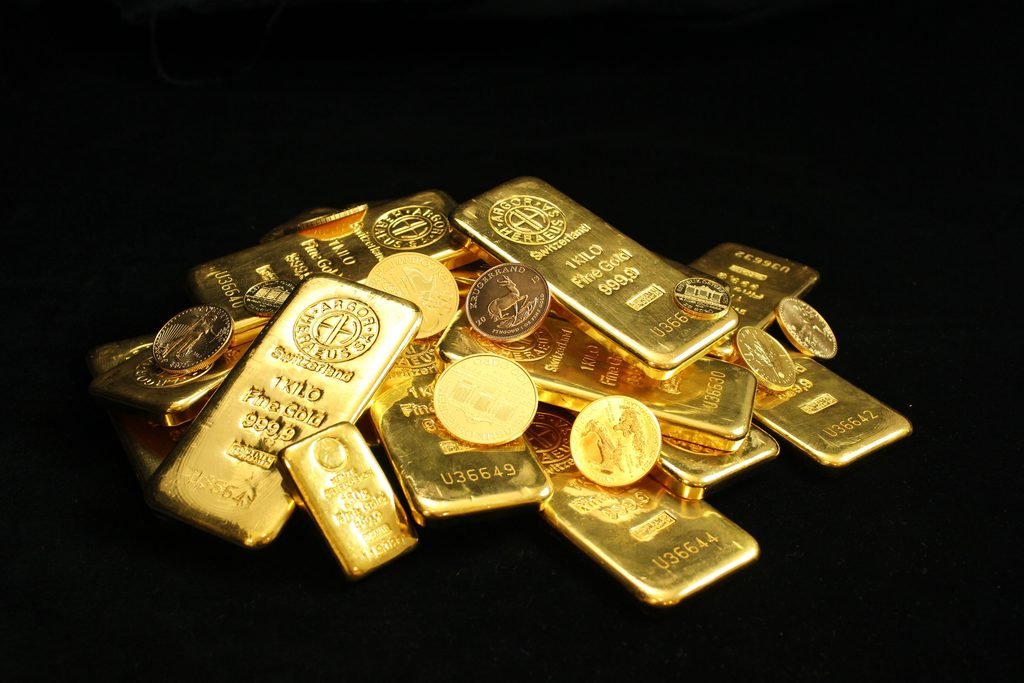
Beyond routine supply and demand, gold has a unique role in global finance as a “safe haven” asset. When geopolitical tensions rise, stock markets become volatile, or economic uncertainty increases, investors worldwide often shift money into gold, since it’s historically held its value better than many other assets during turbulent periods.
This means gold prices can rise sharply during global crises or uncertainty — even when nothing about India’s domestic gold market has changed at all. As Groww’s gold rate resource explains, the US dollar’s performance is one of the biggest determinants of gold prices worldwide, since a stronger dollar typically corresponds to softer gold prices, and vice versa.
8. Central Bank Decisions Move Gold More Than You’d Expect
Decisions made by major central banks — particularly the US Federal Reserve’s interest rate policies — have an outsized effect on gold prices globally. When interest rates are low, gold becomes more attractive compared to interest-bearing assets like bonds, since gold itself doesn’t pay any interest but also doesn’t lose value the way cash can during inflation.
Economic data releases — including inflation reports, employment figures, and GDP numbers — can also move gold prices within hours of being announced, as traders adjust their expectations for future interest rate decisions.
9. Why MCX Gold Prices Can Look Different From Jeweller Prices
If you’ve checked gold rates on the Multi Commodity Exchange (MCX) and noticed they look different from what your local jeweller quotes, this isn’t an error — MCX gold futures prices are quoted in INR per 10 grams and already include import duty, GST, and futures-specific carrying costs, while jeweller prices add their own local premiums and making charges on top.
Both prices are legitimate — they simply reflect different stages of the same underlying gold market.
10. How to Actually Check an Accurate Gold Rate Today

Given how many factors move throughout the day, the most reliable way to check today’s actual gold rate is through a source that updates in real time, rather than relying on a rate you saw days or even hours earlier. Reliable sources include:
- Trusted jeweller websites, which typically update rates daily based on current market conditions
- Commodity exchange platforms like MCX and NCDEX, which display live gold futures rates
- Financial news portals such as Economic Times, Moneycontrol, or Business Standard
- Banking apps that offer gold investment tracking with live rate updates
Since gold prices can shift multiple times within a single day, checking a source close to your actual purchase time will always give you a more accurate picture than relying on yesterday’s rate.
What Affects Gold Price in India — At a Glance
| Factor | How It Affects Price |
|---|---|
| International gold price (XAUUSD) | Sets the global base price in US dollars |
| Rupee-Dollar exchange rate | A weaker rupee raises the INR price of gold |
| Import duty & GST | Adds a fixed percentage on top of the base price |
| Purity (24K vs 22K vs 18K) | Higher purity means higher price per gram |
| Making charges | Adds 8–35% for jewellery, on top of raw gold cost |
| Wedding season & festivals | Increased demand can push prices slightly higher |
| Global uncertainty | Gold often rises as a “safe haven” investment |
| Central bank interest rate decisions | Lower rates typically make gold more attractive |
Frequently Asked Questions
Why is Indian gold price higher than the international price? Indian gold prices are typically 5–8% higher than the international spot price due to import duty (around 15%), GST (3%), and local dealer or jeweller premiums added on top.
Why does 24K gold cost more than 22K gold? 24K gold is about 99.9% pure, while 22K gold is around 91.6% pure with other metals mixed in for durability — the higher gold content in 24K directly makes it more expensive per gram.
Does the rupee-dollar exchange rate really affect gold prices? Yes. Since gold is priced internationally in US dollars, a weaker rupee means more rupees are needed to buy the same amount of gold, raising the domestic price even if the international price hasn’t moved.
Why do gold prices rise during wedding season? Increased buying demand during India’s wedding season (October to February) and major festivals like Dhanteras can push prices slightly above standard market calculations.
Where can I check the most accurate gold rate today? Trusted jeweller websites, commodity exchanges like MCX, financial news portals, and banking apps that track live gold rates are generally the most reliable sources, since prices can change multiple times within a single day.
Conclusion
Gold’s daily price changes aren’t random — they’re the result of a genuinely interconnected system involving international markets, currency exchange rates, government policy, purity levels, and even cultural demand patterns unique to India. Understanding these factors doesn’t just satisfy curiosity — it can help you make more informed decisions about when and how to buy gold, whether for tradition, celebration, or investment.
(Related reading: UPI and Digital Payments in India 2026: 10 Ways India Is Leading the World)