
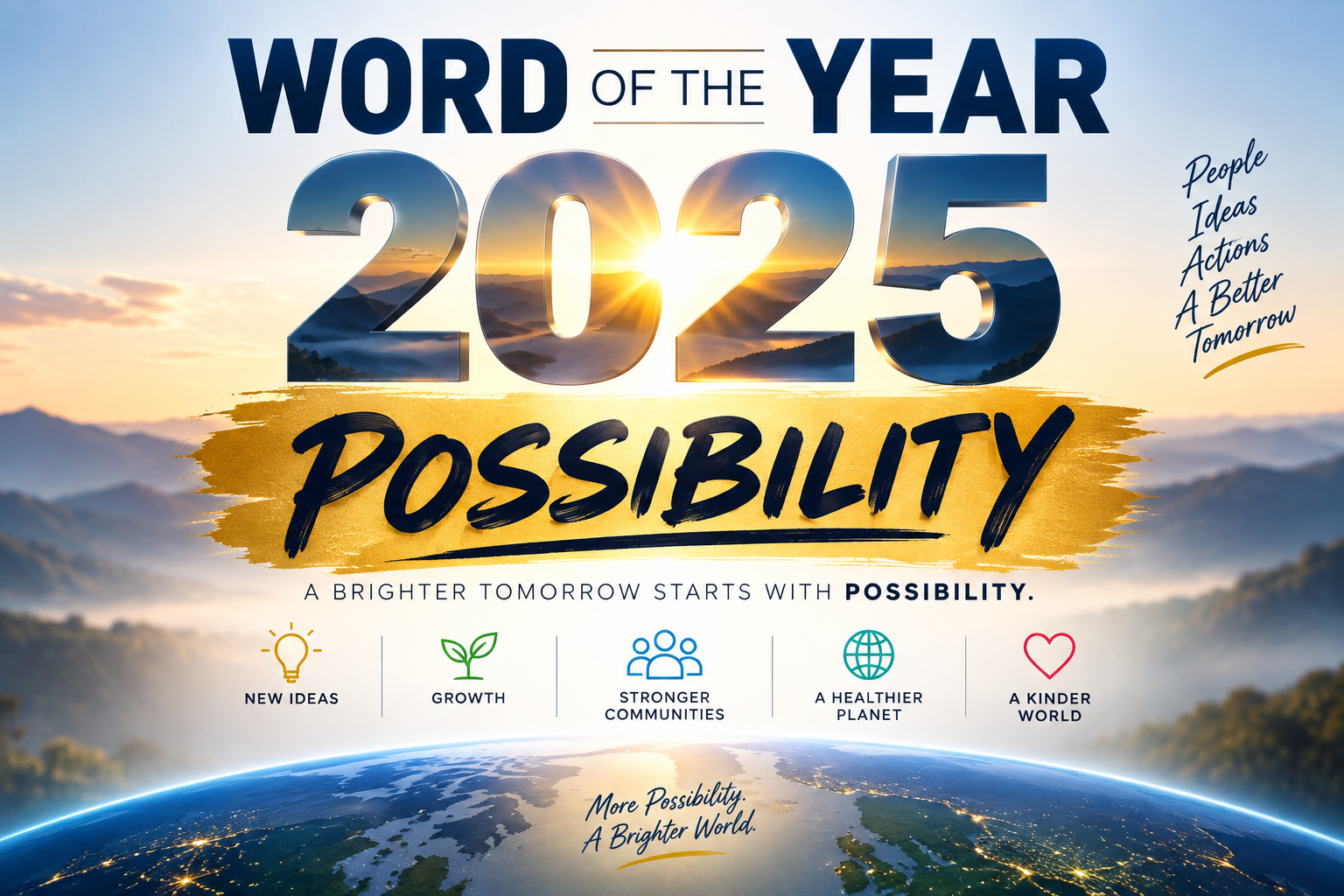
Word of the Year 2025: What the World’s Most-Talked-About Words Reveal
Word of the year selections from major dictionaries offer a fascinating snapshot every year, as institutions step back and ask a simple question: which single word captured how people actually talked, searched, and argued over the past twelve months? The answers for 2025 paint a strikingly consistent picture — one dominated by social media manipulation, artificial intelligence, and the strange new vocabulary of internet culture.
From “rage bait” to “slop,” these words aren’t just clever additions to the dictionary — they’re a snapshot of what an entire year of human attention, anxiety, and online behavior actually looked like. Here’s what each major dictionary chose, and what it reveals.
Table of Contents
- Oxford’s Word of the Year: “Rage Bait”
- Merriam-Webster’s Word of the Year: “Slop”
- Cambridge’s Word of the Year: “Parasocial”
- Dictionary.com’s Word of the Year: “67”
- Collins’ Word of the Year: “Vibe Coding”
- The Common Thread Connecting All Five Words
- How Do Dictionaries Actually Choose These Words?
- A Quick Look Back: Words of the Year Through History
- What This Year’s Words Reveal About Society
- What Might Next Year’s Word Look Like?
1. Oxford’s Word of the Year: “Rage Bait”
Oxford University Press selected “rage bait” as its 2025 Word of the Year, following three days of public voting with more than 30,000 participants alongside expert analysis. Oxford defines it as online content deliberately designed to elicit anger or outrage by being frustrating, provocative, or offensive — typically posted specifically to increase traffic or engagement with a webpage or social media post.
According to Oxford University Press’s official announcement, usage of the term tripled over the course of the year, reflecting a broader shift in how attention itself is captured and monetized online — through provoking anger rather than simply sparking curiosity.
2. Merriam-Webster’s Word of the Year: “Slop”
Merriam-Webster chose “slop” — defined as low-quality digital content, often produced in large quantities by artificial intelligence. The term captures the flood of absurd videos, fabricated news, AI-generated books, and other content that is simultaneously annoying and, somehow, still widely consumed.
Historically, “slop” referred to soft mud or discarded food waste. Its transformation into a metaphor for careless, soulless AI-generated content reflects society’s deeply ambivalent relationship with artificial intelligence in 2025 — useful and unavoidable, yet often associated with a decline in quality.
3. Cambridge’s Word of the Year: “Parasocial”
Cambridge Dictionary’s choice, “parasocial,” describes the one-sided emotional relationships people form with celebrities, influencers, or public figures they’ve never actually met. Cambridge noted a striking spike in dictionary searches for the word around June 30, 2025, tied to a viral moment when a livestreamer publicly blocked an obsessive fan who described themselves as his “number 1 parasocial.”
What makes this choice notable is the word’s journey from a purely academic term into everyday social media vocabulary — spotlighting how ordinary people increasingly discuss celebrity fandom, AI chatbot companionship, and even romantic attachment to digital personas using language once confined to psychology textbooks.
4. Dictionary.com’s Word of the Year: “67”
Perhaps the most unusual choice on this list, Dictionary.com selected “67” — a slang term used primarily by younger internet users to mean something like “so-so,” “maybe this, maybe that,” or an intentionally ambiguous response. The term emerged from internet meme culture, spreading through music, sports references, and viral short-form video content.
This choice reflects a broader trend in youth internet slang: numbers and seemingly random phrases taking on entirely new meanings through shared online jokes, often serving as an inside signal that immediately identifies someone as part of a particular online community.
5. Collins’ Word of the Year: “Vibe Coding”

Collins Dictionary, drawing on its large corpus of spoken and written English, chose “vibe coding” as its word of the year, embracing a term from the technology industry. The phrase refers to a style of software development where a person describes what they want in natural, conversational language, and an AI tool generates the underlying code — prioritizing intuition and iteration over traditional, line-by-line manual programming.
This choice reflects just how significantly artificial intelligence has begun reshaping not just consumer technology, but the actual practice of software development itself, in ways that would have sounded like science fiction only a few years earlier.
6. The Common Thread Connecting All Five Words
Looking across all five dictionaries’ choices, a clear pattern emerges: nearly every major word of 2025 connects either to artificial intelligence’s growing role in daily life, or to the psychological effects of social media and online attention. “Slop” and “vibe coding” both center directly on AI. “Rage bait” and “parasocial” both describe how social media manipulates and reshapes human emotion and attachment. Even “67,” while playful, reflects how quickly and unpredictably online culture now generates and spreads new language.
This convergence across five independent institutions, using different methodologies, suggests these words aren’t isolated internet trends — they’re capturing something genuinely significant about how people experienced 2025.
7. How Do Dictionaries Actually Choose These Words?
Each dictionary follows a somewhat different process. Merriam-Webster and Cambridge lean heavily on lookup and search spikes on their own websites, then apply editorial judgment — Cambridge specifically filters for words that feel linguistically notable and reflective of the broader cultural moment. Collins draws on its large corpus of spoken and written English to identify words that rose sharply in real-world usage. Oxford combines corpus-based language research with editorial curation and, in certain years, direct public voting before making its final decision.
Despite their different methods, all five approaches are ultimately trying to answer the same question: which word, more than any other, captured genuine, widespread public attention and conversation that year.
8. A Quick Look Back: Words of the Year Through History
Comparing 2025’s choices to previous years reveals just how quickly cultural focus can shift. In 2024, Merriam-Webster chose “polarization,” reflecting deep political and social division. In 2023, Oxford selected “brain rot,” describing the deterioration of a person’s mental state from consuming excessive low-quality online content — arguably an early precursor to 2025’s “slop.” Going back further, 2022 was dominated by Wordle’s cultural explosion, with Cambridge choosing “homer” after searches for the word spiked nearly 75,000 times in a single week when it appeared as a Wordle answer.
This history shows word-of-the-year choices often function as a kind of cultural time capsule, capturing not just language trends but the specific viral moments, technologies, and anxieties that defined a particular year.
9. What This Year’s Words Reveal About Society
Taken together, 2025’s words of the year suggest a society grappling seriously with two intertwined forces: the flood of AI-generated content reshaping what people read, watch, and even how they write software, and the psychological effects of social media platforms that increasingly reward outrage and parasocial attachment over genuine connection. These aren’t abstract concerns confined to academic discussion — they were significant enough to spike search traffic across five major dictionaries independently.
This also reflects a broader linguistic pattern where technical, once-niche terminology increasingly moves into mainstream, everyday vocabulary at a much faster pace than in previous decades, largely driven by how quickly ideas can now spread through social media.
10. What Might Next Year’s Word Look Like?
Given the trajectory of 2025’s choices, next year’s word of the year will likely continue tracking how artificial intelligence reshapes daily life and communication, alongside whatever new social media dynamics or platforms emerge to reshape public attention. If history is any guide, the chosen word will almost certainly emerge from a specific viral moment or technological shift that few people are talking about yet — only becoming obvious in hindsight, the way “rage bait,” “slop,” and “parasocial” now define 2025 so clearly.
2025 Words of the Year at a Glance
| Dictionary | Word of the Year | What It Means |
|---|---|---|
| Oxford | Rage bait | Content designed to provoke anger for engagement |
| Merriam-Webster | Slop | Low-quality, mass-produced AI content |
| Cambridge | Parasocial | One-sided emotional attachment to public figures |
| Dictionary.com | 67 | Slang for an intentionally ambiguous response |
| Collins | Vibe coding | AI-assisted, conversational software development |
Frequently Asked Questions
Why did so many dictionaries choose AI-related words in 2025? Because artificial intelligence’s growing role in content creation, software development, and daily life generated enough real-world search activity and public conversation to dominate multiple dictionaries’ selection criteria independently.
What does “rage bait” actually mean? It refers to online content deliberately designed to provoke anger or outrage, typically to increase traffic or engagement on a webpage or social media post.
Is “67” really considered a word? Yes, according to Dictionary.com, which tracks how language actually evolves through real usage — including slang and internet-driven terms that carry clear, shared meaning within specific communities.
How do dictionaries decide on their word of the year? Most rely on some combination of search and lookup data, corpus analysis of real-world usage, editorial judgment, and in some cases, public voting.
Has a word of the year ever come from a game or app before? Yes — in 2022, Cambridge Dictionary chose “homer” after searches spiked dramatically when the word appeared as an answer in the game Wordle.
Conclusion
The words dictionaries chose for 2025 — rage bait, slop, parasocial, 67, and vibe coding — tell a consistent story about a year shaped by artificial intelligence and the psychological pull of social media. Far from being trivial additions to the dictionary, these words capture genuine shifts in how people communicate, create, and emotionally connect in an increasingly online world — making them a uniquely honest snapshot of exactly what 2025 felt like to live through.
(Related reading: Artificial Intelligence: 10 Powerful Ways AI Is Changing Our Lives)