
Mughal Empire: 10 Fascinating Facts About India’s Great Dynasty
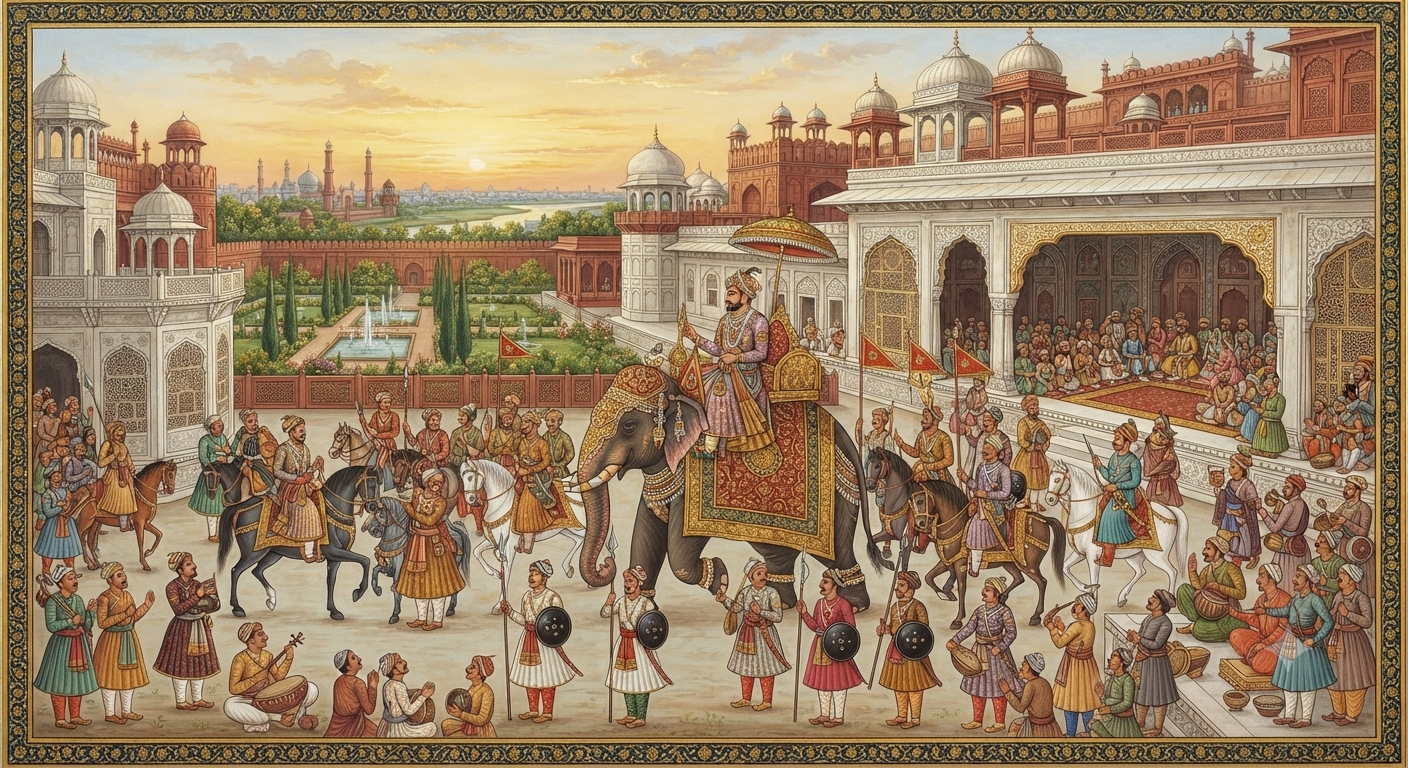
Few empires have left as lasting a mark on India’s culture, architecture, and history as the Mughal Empire. For more than three centuries, Mughal rulers shaped vast stretches of the Indian subcontinent, leaving behind iconic monuments, administrative systems, and a cultural legacy that continues to influence India today.
From its dramatic founding on the battlefield to its eventual decline under British rule, the story of the Mughal Empire is filled with remarkable figures and achievements. Here are 10 fascinating facts about one of history’s greatest dynasties.
Table of Contents
- The Empire Was Founded by a 12-Year-Old King
- It Began With a Decisive Battle in 1526
- Babur’s Descendants Traced Lineage to Genghis Khan
- Akbar Transformed the Empire Into a Centralized State
- Akbar Promoted an Unusual Blend of Religions
- The Empire Reached Its Golden Age Under Shah Jahan
- The Taj Mahal Was a Monument to Love
- Aurangzeb Ruled the Empire’s Largest Territory
- Mughal Architecture Left a Lasting Legacy
- The Empire Ended With British Rule in 1857
1. The Empire Was Founded by a 12-Year-Old King
The story of the Mughal Empire begins with an extraordinary figure: Babur, born Zahir ud-Din Muhammad, who ascended to the throne of Fergana at just 12 years old in 1494. Despite this early start, his path to power was far from smooth — he was soon forced to abdicate his ancestral throne after being attacked by rival Uzbeg forces.
This turbulent early life would go on to shape Babur’s later military campaigns, eventually leading him from Central Asia into the Indian subcontinent.
2. It Began With a Decisive Battle in 1526
The Mughal Empire officially began on 21 April 1526, when Babur defeated Ibrahim Lodi, the Sultan of Delhi, at the First Battle of Panipat. This victory laid the foundation for what would become one of the most powerful empires in Indian history, ruling large parts of the subcontinent from the early 16th to mid-19th centuries.
To commemorate this early victory, Babur constructed the Kabuli Bagh Mosque in Panipat, marking the beginning of a dynasty that would leave architectural landmarks across the region for centuries to come.
3. Babur’s Descendants Traced Lineage to Genghis Khan
The Mughal dynasty’s name itself reflects its Central Asian roots — “Mughal” is derived from the word for “Mongol.” Babur traced his ancestry to Timur through his father’s line and to Genghis Khan through his mother’s line, giving the dynasty a heritage that combined Central Asian, Persianate, and eventually South Asian traditions.
This blended cultural background would go on to shape Mughal art, language, and court culture throughout the empire’s history.
4. Akbar Transformed the Empire Into a Centralized State
Babur’s grandson, Akbar, ruled from 1556 to 1605 and is widely regarded as the empire’s most influential state-builder. Akbar expanded Mughal territory significantly while also developing administrative reforms, including the Mansabdari system, which helped create a more organized and centralized government structure.
According to Vajiram & Ravi’s overview of Mughal administration, Akbar’s policy of Sulh-i-Kul, meaning “peace with all,” helped strengthen political unity by fostering relationships with regional rulers, including many Rajput kingdoms.
5. Akbar Promoted an Unusual Blend of Religions
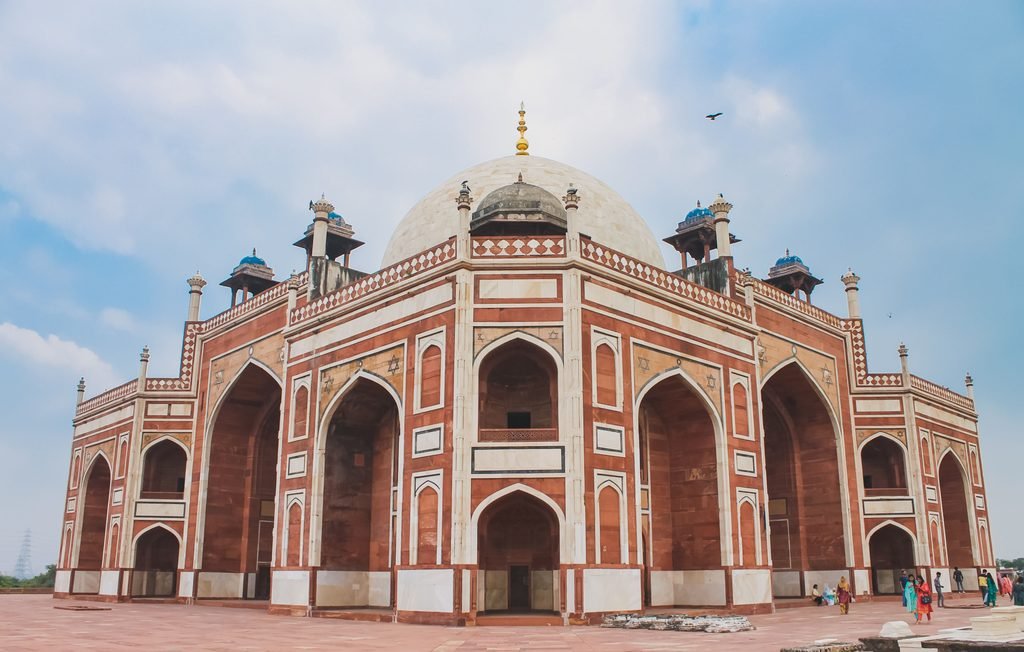
Among Akbar’s most distinctive legacies was his approach to religion. He abolished the jizya, a tax previously imposed on non-Muslim subjects, and introduced Din-i-Ilahi, an eclectic belief system that blended elements of Hinduism, Islam, and Christianity. Akbar also regularly hosted debates among religious and intellectual figures with differing viewpoints at Fatehpur Sikri, a city he founded.
This spirit of religious tolerance was notable for its era and remains one of the most studied aspects of Akbar’s reign among historians.
6. The Empire Reached Its Golden Age Under Shah Jahan
When Shah Jahan became emperor in October 1627, the Mughal Empire was large and wealthy enough to be considered one of the greatest empires in the world at that time. His reign is often described as the empire’s golden age of architecture and culture, producing some of the most celebrated monuments in Mughal history.
Beyond architecture, Shah Jahan’s court was also a center of art, literature, and craftsmanship, reflecting the empire’s peak in wealth and cultural sophistication.
7. The Taj Mahal Was a Monument to Love
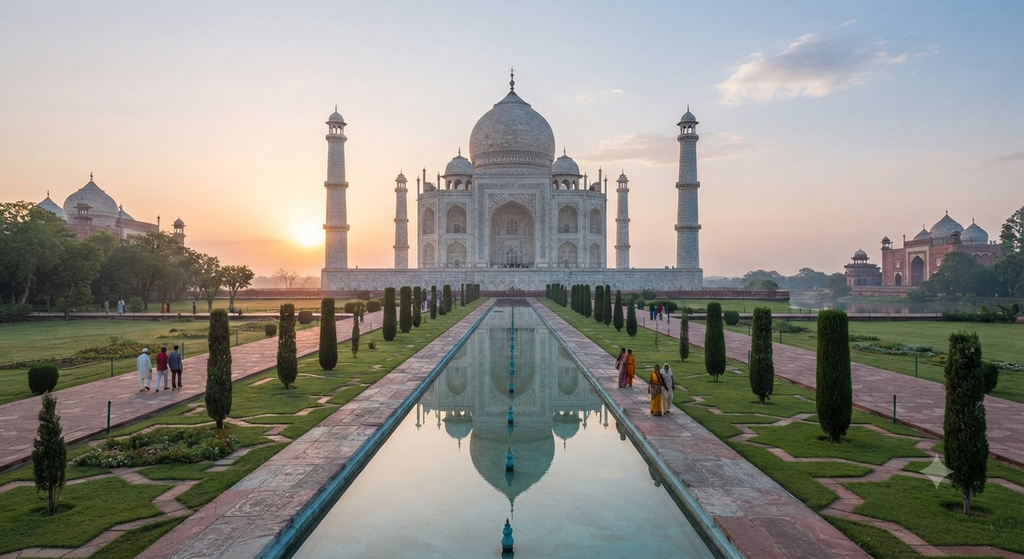
Perhaps the most famous achievement of Shah Jahan’s reign was the construction of the Taj Mahal, built between 1630 and 1653 in memory of his wife, Mumtaz Mahal. Interestingly, the Mughal fascination with gardens and nature dated back to Babur himself, who created the first Mughal garden — now known as Ram Bagh in Agra — near the site where the Taj Mahal would later be built.
This connection between the empire’s founder and its most iconic monument reflects how deeply nature and beauty were woven into Mughal architectural philosophy across generations.
8. Aurangzeb Ruled the Empire’s Largest Territory
Following Shah Jahan, his son Aurangzeb expanded the Mughal Empire to its greatest territorial extent, controlling most of the Indian subcontinent, including areas of modern India, Pakistan, Bangladesh, and parts of Afghanistan. While Akbar is often considered the most influential state-builder and Shah Jahan is remembered for architectural achievement, Aurangzeb’s reign is distinguished by sheer territorial scale.
However, this expansion came at a cost, as prolonged military campaigns placed significant strain on the empire’s finances and administration.
9. Mughal Architecture Left a Lasting Legacy
Beyond the Taj Mahal, the Mughal Empire produced an extraordinary range of architectural achievements, including the Red Fort Complex, Jama Masjid, Agra Fort, Humayun’s Tomb, and the city of Fatehpur Sikri. These structures blended Persian, Central Asian, and Indian architectural traditions, creating a distinctive style that continues to define much of India’s historical skyline today.
This architectural legacy remains one of the most visible and enduring contributions of Mughal rule, drawing millions of visitors to India each year.
10. The Empire Ended With British Rule in 1857
Following Aurangzeb’s death, the Mughal Empire entered a long period of decline, driven by weak leadership, economic strain, and growing European colonial pressure. The dynasty’s final chapter came after the Indian Rebellion of 1857, when the British formally dissolved the Mughal Empire, deposing its last emperor, Bahadur Shah II, in September 1857.
This marked the end of more than three centuries of Mughal rule, closing one of the most influential chapters in Indian history.
Mughal Empire at a Glance
| Emperor | Reign | Known For |
|---|---|---|
| Babur | 1526–1530 | Founded the empire after the First Battle of Panipat |
| Humayun | 1530–1540, 1555–1556 | Regained the throne after losing it to Sher Shah Suri |
| Akbar | 1556–1605 | Administrative reforms, religious tolerance, empire expansion |
| Jahangir | 1605–1627 | Continued cultural and artistic development |
| Shah Jahan | 1627–1658 | Commissioned the Taj Mahal, architectural golden age |
| Aurangzeb | 1658–1707 | Ruled the empire’s largest territorial extent |
Frequently Asked Questions
Who founded the Mughal Empire? The Mughal Empire was founded by Babur, who defeated Ibrahim Lodi at the First Battle of Panipat in 1526.
Why is it called the Mughal Empire? The name “Mughal” derives from the word for “Mongol,” reflecting Babur’s ancestral lineage to Genghis Khan.
Who built the Taj Mahal? Shah Jahan commissioned the Taj Mahal in memory of his wife, Mumtaz Mahal, with construction taking place between 1630 and 1653.
Which Mughal emperor ruled the largest territory? Aurangzeb ruled the Mughal Empire at its greatest territorial extent, controlling most of the Indian subcontinent.
When did the Mughal Empire end? The Mughal Empire formally ended in 1857, when the British deposed the last Mughal emperor, Bahadur Shah II, following the Indian Rebellion of 1857.
Conclusion
The Mughal Empire’s story — from a 12-year-old king’s turbulent rise to power, to an empire renowned for architectural marvels and religious tolerance, to its eventual decline under colonial pressure — remains one of the richest chapters in Indian history. Its legacy lives on today through iconic monuments like the Taj Mahal and Red Fort, which continue to define India’s cultural and architectural identity centuries after the empire’s fall.
(Related reading: Golden Temple: 10 Fascinating Facts About India’s Holiest Sikh Shrine)