
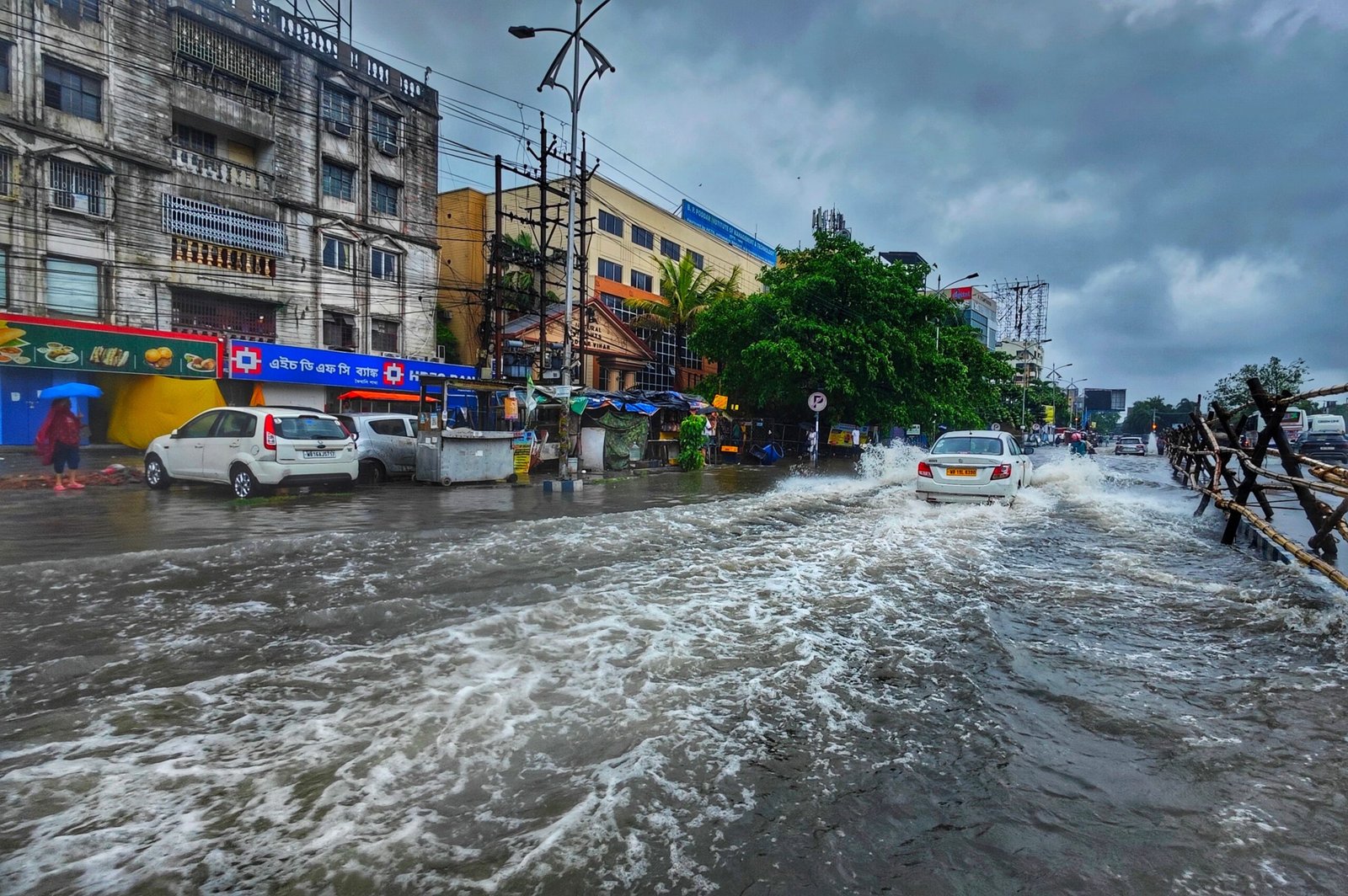
Climate Change in India and the World: 10 Facts About the Current Crisis
Climate change is no longer a distant scientific projection — it is actively reshaping rivers, cities, agriculture, and daily life across India and the world in 2026. From record-breaking extreme weather events to shifting global rankings on climate performance, the data emerging this year paints a clear picture: the climate crisis has moved from warning to lived reality for hundreds of millions of people.
Understanding where India and the world currently stand — through data, reports, and expert assessments — is essential for making sense of one of the defining challenges of our time. Here are 10 important facts about climate change in India and globally, based on the latest available reports in 2026.
Table of Contents
- Extreme Weather Hit India on Nearly Every Day of 2025
- Crop Damage and Deaths Have Risen Sharply
- The World May Be Nearing a Critical Climate Tipping Point
- India Ranks Among the Most Climate-Affected Nations
- Floods and Storms Cause the Most Economic Damage
- India Has Made Real Progress on Renewable Energy
- But India’s Climate Targets Remain “Highly Insufficient”
- Coal Remains a Central Sticking Point
- Experts Are Calling for a Shift in Approach
- Nature-Based Solutions Are Gaining Attention
1. Extreme Weather Hit India on Nearly Every Day of 2025
According to the State of India’s Environment 2026 report, published by the Centre for Science and Environment (CSE), 2025 saw the highest frequency and impact of extreme weather events in India in the past four years. Between January 1 and November 30, 2025, extreme weather events — including heatwaves, cold waves, heavy rainfall, and floods — occurred on 99% of days.
This marks a sharp rise from 2024, when extreme weather events occurred on 88% of days, showing a rapid year-on-year escalation in how often India experiences disruptive weather conditions.
2. Crop Damage and Deaths Have Risen Sharply
The human and economic toll behind these statistics is significant. According to the CSE’s State of India’s Environment 2026 report, as covered by Vajiram & Ravi, extreme weather events in 2025 resulted in 4,419 deaths and affected 17.41 million hectares of crop area across the country.
These figures highlight the growing vulnerability of both agriculture and human settlements to increasingly frequent climate variability, with direct consequences for food security and rural livelihoods.
3. The World May Be Nearing a Critical Climate Tipping Point
CSE experts have warned that global temperature rise may soon exceed the 1.5°C threshold set under the Paris Agreement, a level widely regarded by scientists as marking a critical climate tipping point. Crossing this threshold would signal a substantial acceleration in the risks associated with global warming, from more intense heatwaves to more severe storms and sea-level rise.
This warning connects India’s domestic climate trends directly to the broader global climate trajectory, reinforcing that no country’s climate risk exists in isolation.
4. India Ranks Among the Most Climate-Affected Nations
The Climate Risk Index (CRI) 2026, published by Germanwatch and released at COP30 in Belém, Brazil, ranks India as the 9th most climate-affected country in the world, based on an analysis of three decades of climate data from 1995 to 2024. The report examined more than 430 extreme weather events using indicators including economic losses, fatalities, and the number of people affected.
This ranking reflects what the report describes as “continuous climate threats” — a pattern where communities face repeated disasters without fully recovering from previous ones.
5. Floods and Storms Cause the Most Economic Damage
Breaking down the nature of climate-related losses, the Climate Risk Index found that floods and storms together caused 58% of all monetary damage recorded globally, while heatwaves and storms combined were responsible for roughly two-thirds of climate-related fatalities. This distinction matters for policy planning, since flood-related economic losses and heat-related deaths often require very different mitigation and preparedness strategies.
For India specifically, this reinforces findings from the CSE report showing floods as a major and growing risk category, driven partly by warming temperatures.
6. India Has Made Real Progress on Renewable Energy
Despite these risks, India has also shown measurable progress on the renewable energy front. According to the Climate Change Performance Index (CCPI), India reported reaching 50% of installed power capacity from non-fossil sources in 2025, ahead of its 2030 Nationally Determined Contribution (NDC) target. As of September 2025, India’s total solar rooftop capacity stood at 20.8 GW, with nearly 9 GW added in just the past year.
CCPI experts specifically highlighted record renewable energy auction participation and continuously falling tariffs as genuine positives in India’s climate strategy.
7. But India’s Climate Targets Remain “Highly Insufficient”
Despite renewable energy progress, independent assessments paint a more cautious picture of India’s overall climate trajectory. According to the Climate Action Tracker, India’s 2030 emissions under current policies are actually 8–11% higher than in the tracker’s previous assessment, with overall emissions still expected to rise beyond 2030.
The Climate Action Tracker rates India’s climate targets and action as “Highly insufficient” relative to global 1.5°C pathways, even though India’s policies are rated only “Insufficient” when measured against the country’s own fair-share contribution to the global climate effort.
8. Coal Remains a Central Sticking Point
A recurring theme across multiple 2026 climate assessments is coal’s continued central role in India’s energy mix. The CCPI notes there is no national coal exit timeline, and new coal blocks continue to be auctioned even as renewable capacity expands. Fossil fuel subsidies and existing infrastructure lock-ins persist, complicating efforts to shift more decisively toward a low-carbon energy system.
More than 100 GW of additional renewable capacity is still needed by 2026–27 alone to meet interim national targets of approximately 350 GW, according to the Climate Action Tracker’s analysis of India’s National Electricity Plan implementation.
9. Experts Are Calling for a Shift in Approach
Beyond the numbers, the State of India’s Environment 2026 report emphasizes a broader philosophical shift that experts say is urgently needed: moving from post-disaster relief work toward pre-disaster resilience planning. As the report puts it, climate change is no longer a distant possibility — it is already shaping rivers, cities, and daily life, meaning climate science needs to be integrated into everyday planning decisions, from culvert design to land allocation along rivers.
The report also points to structural inequality in India’s environmental monitoring, noting that smaller towns and industrial regions — which often face pollution levels equal to or worse than larger cities — frequently lack real-time environmental data entirely.
10. Nature-Based Solutions Are Gaining Attention
In response to rising flood risks and extreme weather, the State of India’s Environment 2026 report specifically recommends nature-based solutions as a key part of the path forward. These include restoring wetlands, reconnecting rivers to their natural floodplains, groundwater recharge programs, rainwater harvesting, and the restoration and construction of lakes.
Rather than relying solely on hard infrastructure like dams and levees, this approach treats natural ecosystems themselves as a form of climate resilience infrastructure — one that experts argue has been historically underused in India’s environmental planning.
Climate Change in India 2026 at a Glance
| Metric | Figure |
|---|---|
| Days with extreme weather in India (2025) | 99% of days (Jan–Nov) |
| Deaths from extreme weather (2025) | 4,419 |
| Crop area affected (2025) | 17.41 million hectares |
| India’s Climate Risk Index rank | 9th most climate-affected (1995–2024) |
| Share of global damage from floods/storms | 58% |
| India’s non-fossil power capacity (2025) | 50% of installed capacity |
| India’s rooftop solar capacity (Sept 2025) | 20.8 GW |
| Additional renewable capacity still needed | 100+ GW by 2026–27 |
Frequently Asked Questions
How often did India experience extreme weather in 2025? According to the State of India’s Environment 2026 report, extreme weather events occurred on 99% of days between January 1 and November 30, 2025.
Where does India rank on global climate risk? India ranks 9th among the most climate-affected countries in the world, according to the Climate Risk Index 2026 by Germanwatch, based on data from 1995 to 2024.
Is India making progress on renewable energy? Yes. India reached 50% of installed power capacity from non-fossil sources in 2025, ahead of its 2030 target, with rooftop solar capacity reaching 20.8 GW by September 2025.
Are India’s climate targets considered adequate? No. The Climate Action Tracker rates India’s current climate targets and action as “Highly insufficient” relative to global 1.5°C pathways, despite genuine renewable energy progress.
What solutions are experts recommending for India? Reports recommend nature-based solutions such as wetland restoration, floodplain reconnection, groundwater recharge, and rainwater harvesting, alongside a broader shift from disaster relief to disaster resilience planning.
Conclusion
The data from 2025 and 2026 makes clear that climate change is no longer a future risk for India — it is a present, measurable reality affecting weather patterns, agriculture, and human lives on an almost daily basis. While India has made genuine strides in renewable energy deployment, independent assessments consistently show that current policies remain insufficient to meet global climate goals. Bridging this gap will likely define much of India’s — and the world’s — climate policy conversation for the remainder of the decade.
(Related reading: 10 Amazing Facts About Earth That Will Surprise You)